The Burnout Prevention & Recovery Hub.
Comprehensive resilience support tailored to the challenges of environmental work.
From eco-distress to burnout, and moral injury to funding pressures, access instant, in-depth resilience training. Grow out of six years’ experience supporting environmental organisations to build healthy culture.

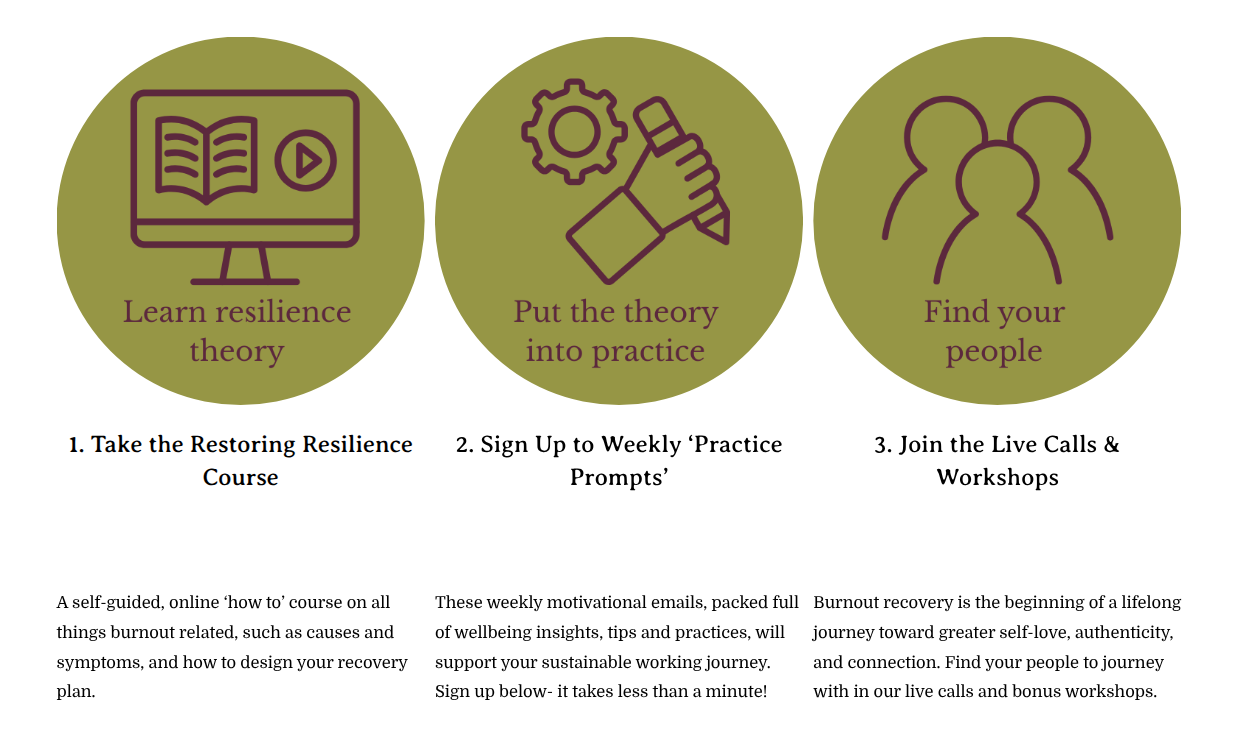
Our three-tiered approach…
Comprehensive, self-paced resilience training to reduce burnout, work with eco-anxiety, and build healthy working cultures. Includes ‘The Recovery Room’ which offers instant support for the here and now, such as for a financial or mental health crisis.

Weekly 'practice prompts' via email packed full of inspiration to put the theory into practice. Includes podcasts, meditations and journal prompts, as well as an ever-growing library of resilience resources.

Regular live calls to build community, and share learnings and experiences across the environmental movement. Includes workshops with resilience specialists to delve deeper into the application of resilience theory.
A bit more about the Hub…
Jo Musker-Sherwood
Working Well Network Co-Convener, Healthy Cultures Expert and Resilience Specialist
For more information about accessing the Hub, fill in the form to get in touch with us.
Get In Touch